
Lower IT exports will raise India's dependence on capital flows to fund imports.

GST is levied on every transaction in the supply of goods and services, barring certain exempted items
.jpg)
Modi has plenty of opportunities to test out his strategy. Chinese President Xi Jinping and Australian Prime Minister Tony Abbott will visit India this month, and Modi will fly to Washington towards the end of September for a summit with US President Barack Obama.

Was Adani able to clinch this loan merely as a result of his proximity to Prime Minister Narendra Modi?

The Lok Sabha will start a discussion on the Budget on Wednesday.
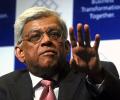
Parekh ensures that he never forgets the importance of correctness.
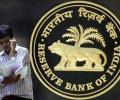
Historically, the RBI has tried to keep the crooks at bay by issuing a circular a day. What it needs is more onsite supervision. Merely checking high-frequency data with the help of technology is insufficient, notes Tamal Bandyopadhyay.

The CII delegation includes many eminent names.

The list includes Gautam Adani's brother Vinod Adani among others.
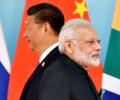
'The events of 2020 have actually put our relationship under exceptional stress.' What External Affairs Minister Dr Subrahmanyam Jaishankar told the All India Conference of China Studies on Thursday, January 28, 2021.

Infra major GMR is hopeful of maintaining strong order book.

T N C Rajagopalan on the new year and new worries.
'What stood out at these meetings between industry representatives and government leaders was how the equation between the ministers and industry had undergone a subtle and qualitative change,' points out A K Bhattacharya.

'We have to make doing business in India easier.'

Sensex catapults 1,241 points and Nifty vaults 382 points in two sessions in a row.
'Our automakers export 50 per cent of what they manufacture and once the policy comes into play, which is in the next 2-3 years, we would become a Rs 10 trillion industry.'
.jpg)
Revenue yield on every rupee of investment fell to Rs 1.06 in FY13 from Rs 1.20 in FY08.

The management changes come amid talks that the company is preparing for an IPO in the United States.
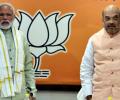
Corporate leaders said a stable government at the Centre will help boost infrastructure spend, address agricultural distress, and encouraging employment.
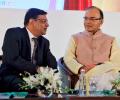
The Financial Stability and Development Council meeting on Tuesday started with an air of tension in the room. An official present described the participants' body language as "tetchy". However, once presentations and discussions begun, the mood considerably eased.
.jpg)
Nearly 40 developers participating in HDFC Indian Homes Fair in London would showcase thousands of property.

Did you know that India is among the top five countries in food processing?
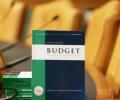
Experts have started giving comments on provisions that the govt must make in Budget 2016-17.

An exercise to rationalise coal linkages which will optimize transport of coal and reduce cost of power is underway.

GMR Infrastructure is part of a consortium led by Philippines-based construction company Megawide Construction which submitted a bid of 14.4 billion Philippine pesos or around $326 million.

'There is no difference between the earlier government and the present government.' 'They are all following the economic policy based on the Chicago School of thought.' 'This school of thought says the government should have very little role in governing the country and the majority of the work should be handed over to the private sector.' 'This has not succeeded in the US.' 'Yet, it is being tried here by people like Arvind Subramaniam, Arvind Panagariya, Urjit Patel and Raghuram Rajan.'
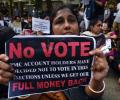
Only when the RBI inspection started on September 19 did they realise that their game was up and one of them had sent a letter to the central bank, leading to the RBI crackdown, report Anup Roy and Subrata Panda.

Ajit Mishra, vice president, Research, Religare Broking, answers your queries:

The RBI has also been asked to consider displaying this information on its website.

The RBI panel has also recommended a government-sponsored 'fund of funds' of Rs 10,000 crore to support the venture capital and private equity firms investing in the MSME sector.

Xi does not want to risk any political or economic crisis complicating his bid to remain in office, observes Ambassador Shyam Saran, the former foreign secretary.
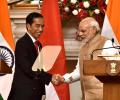
'Joko's re-election bid has been as tough as Modi's.' 'But in a curious reversal of roles, what Joko faced was a platform somewhat akin to Modi has chosen for himself to woo voters,' notes Ambassador M K Bhadrakumar.
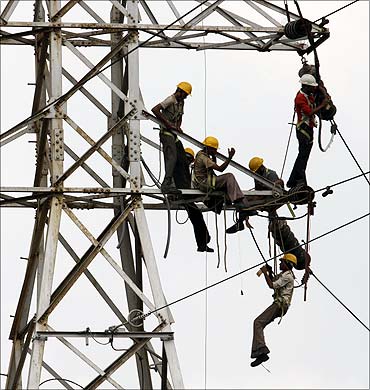
With their balance sheets under stress, private companies have lost interest in them.

Ajit Mishra, vice president, Research, Religare Broking, answers your stock market queries.
While some companies used that to become world leaders, others squandered it by over-borrowing.

Did men and women of redoubtable experience and public service, upholders of the country's steel frame and paragons of corporate governance, never smell a rat?

The two governments have already set a target of increasing bilateral trade in goods and services to $500 billion.

'ISRO facilities are very expensive and any damage caused by these start-ups can create havoc to our space programme.'
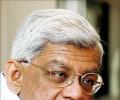
As a consensus remains elusive on key economic policies like foreign investment norms, industry leader Deepak Parekh has said India's FDI policy is akin to 'inviting guests over to our house, but not opening the door'.

The $16.5 billion Carmichael coal mine project when completed would be one of the world's largest.
